.png)

TL;DR:
- Engagement optimization focuses on testing and refining creatives to attract qualified buyers before they land on the page.
- Key metrics include Thumbstop Ratio, Hook Rate, Conversion Rate, ROAS, and fast-loading landing pages.
- Continuous high-velocity testing, message alignment, and system-wide learning are essential for sustained e-commerce success.
Most e-commerce brands are optimizing for the wrong activity, chasing clicks and impressions while the real money sits in the gap between ad creative and landing page performance. Engagement optimization is the discipline that closes that gap. It treats your creative not as decoration but as a targeting mechanism, pulling in the right buyers and priming them to convert before they ever hit your page. This guide breaks down what engagement optimization actually means, which metrics matter, how to test at speed, and how to avoid the traps that drain budget without moving revenue.
| Point | Details |
|---|---|
| Creative is the lever | Prioritizing ad and landing page creative unlocks higher engagement and better conversions. |
| Benchmark the right metrics | Use Thumbstop Ratio, Hook Rate, and Conversion Rate to truly measure engagement optimization success. |
| Test and refresh rapidly | Launching and rotating at least 50 ad variants and regular creative refreshes drive sustainable growth. |
| Avoid hidden pitfalls | Watch out for creative fatigue and ad-to-landing page mismatch to prevent wasted budget. |
Most brands define ad optimization as getting cheaper clicks. Lower your CPM, raise your CTR, call it a win. But that framing ignores the most powerful lever available to DTC brands: the creative itself.
Engagement optimization means systematically testing and refining ad creatives and landing pages to maximize user attention, interaction, and conversion rates, with creative acting as the primary targeting mechanism. Instead of telling the algorithm who to find, you build creative that self-selects the right audience. The people who stop, watch, and click are already pre-qualified.
This is a meaningful shift from standard ad optimization. Standard optimization asks: who should we target? Engagement optimization asks: what creative will attract and convert the right person? The difference sounds subtle. The results are not.
Here is what engagement optimization actually covers:
“Creative is not just content. It is targeting. The hook you write determines the audience you attract, which determines the conversion rate you earn.”
The payoff for improving conversion rates through this lens is compounding. Better creative attracts better-fit buyers. Better-fit buyers convert at higher rates. Higher conversion rates improve your ROAS without touching your bid strategy. That is the engine engagement optimization builds.

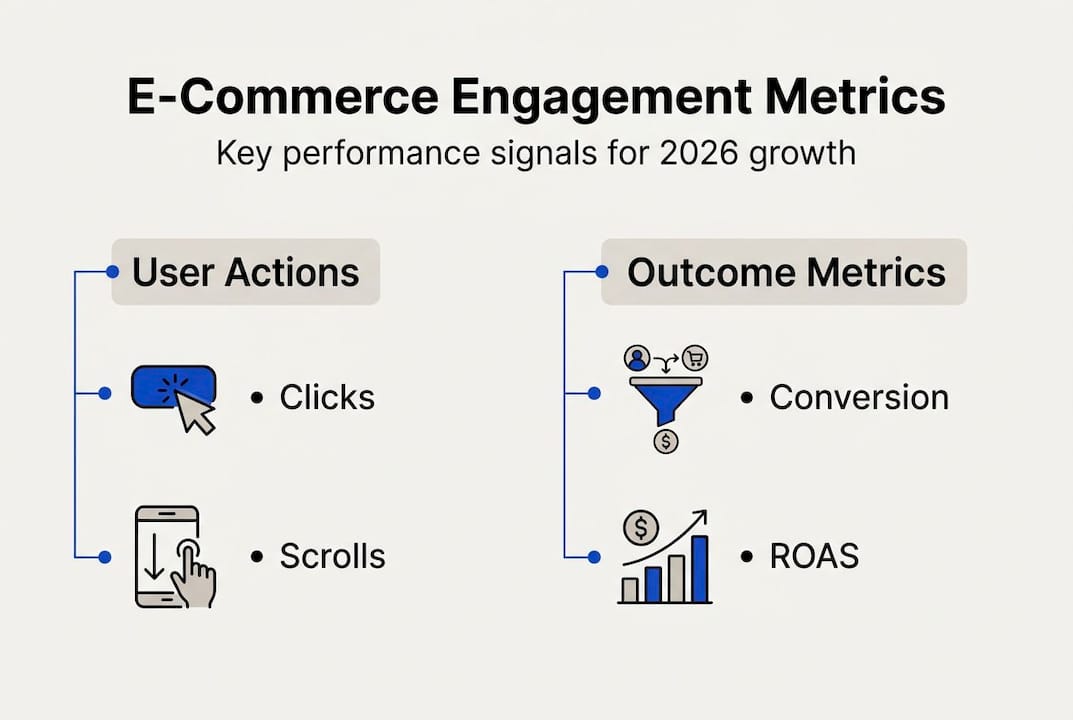
You cannot optimize what you do not measure. And you cannot measure well if you are tracking the wrong things. Vanity metrics like raw impressions or total clicks feel good on a dashboard but tell you almost nothing about whether your creative is actually working.
Here are the five metrics that matter most, along with current empirical benchmarks for each:
| Metric | Definition | Target | High Performance |
|---|---|---|---|
| Thumbstop Ratio | % of viewers who stop scrolling at your ad | 25-30% | 35%+ |
| Hook Rate | % who watch past the first 3 seconds | 25%+ | 35%+ |
| Conversion Rate (CVR) | % of landing page visitors who purchase | 1-3% | 3-6% |
| ROAS | Revenue generated per dollar of ad spend | 2-3x | 4x+ |
| Page Load Time | Seconds for landing page to fully load | Under 2s | Under 1.5s |
Page load time deserves special attention. A landing page that loads in under two seconds doubles conversion rate compared to slower pages. That is not a marginal gain. That is a structural advantage you can build in a single afternoon of technical work.
For full funnel optimization, these metrics need to be reviewed together, not in isolation. A strong Thumbstop Ratio with a weak Hook Rate means your thumbnail works but your opening line fails. A strong Hook Rate with a low CVR means your ad is compelling but your landing page is not delivering on the promise.
Pro Tip: Build a simple weekly dashboard that tracks all five metrics side by side. Patterns across metrics reveal the actual problem faster than any single number can.
Understanding conversion funnel strategies helps you connect these metrics to the specific stage of the funnel where revenue is leaking. Fix the right stage and your entire funnel improves.
Speed wins in creative testing. The brand that runs 50 creative variants in a month learns more than the brand that runs 5, regardless of budget. Volume of learning is the actual competitive advantage.
One of the most effective frameworks for structured creative testing is the 3:2:2 method. Here is how it works:
This structure generates 3 hooks, 2 bodies, 2 headlines per round, giving you 12 unique combinations from a single creative brief. That is high-volume testing without chaos.
Here is how creative volume testing compares to traditional audience-based targeting:
| Approach | Primary lever | Learning speed | Scalability | ROAS impact |
|---|---|---|---|---|
| Audience targeting | Demographics, interests | Slow | Limited | Moderate |
| Creative volume testing | Hook, message, format | Fast | High | Strong |
Creative fatigue is real and it arrives faster than most brands expect. When the same ad runs for more than two weeks without a refresh, frequency climbs, costs rise, and performance drops. Refreshing creatives every 7-14 days keeps your funnel healthy and your algorithm fed with fresh signals.
For deeper guidance on ad testing strategies, the process extends beyond just swapping visuals. Copy tone, offer framing, and social proof placement are all testable variables that move the needle.
Pro Tip: Build a creative calendar that maps out launch dates for new variants two weeks in advance. This prevents the scramble of reactive creative production and keeps your testing cadence consistent.
Learning high-converting ad techniques means treating every creative as a hypothesis, not a finished product.
Even brands that understand engagement optimization get tripped up by two recurring problems: creative fatigue and ad-to-landing page message mismatch. Both are expensive. Both are avoidable.
Creative fatigue happens when your audience has seen the same ad too many times. The symptoms are predictable:
Creative frequency above 3.0 reliably drives up cost per acquisition. The fix is not always a new concept. Sometimes rotating the hook or changing the first frame is enough to reset performance.
Message mismatch is subtler and often more damaging. This is what happens when your ad makes a specific promise and your landing page delivers something different. The buyer clicks expecting one thing and lands somewhere that feels disconnected. Confidence drops. They leave.
“A high CTR with a low conversion rate is not a traffic problem. It is a trust problem. Your ad sold the click but your page did not close the deal.”
Running proper landing page tests helps you identify exactly where the disconnect lives. Is it the headline? The offer? The lack of social proof above the fold?
Mobile deserves its own mention here. Most DTC traffic is mobile-first, but many brands still design landing pages on desktop and assume they translate. They rarely do. Test your pages on actual mobile devices, not just browser simulators.
For brands working on lead conversion steps, message alignment between ad and page is the single highest-leverage fix available. Even SaaS landing page tips reinforce the same principle: continuity of message builds the trust that converts.
Knowing the theory is one thing. Running the tests is another. Here is a practical roadmap for launching your own engagement optimization program:
For Landing Page best practices, the same iterative logic applies. Test one element at a time: headline, hero image, CTA button, social proof block. Changing multiple elements at once makes it impossible to know what drove the result.
Prioritize ROAS and CPA over vanity metrics at every review. If a creative drives strong engagement but weak revenue, it is not a winner. Revenue is the only scorecard that matters.
Pro Tip: Keep a “creative graveyard” document where you log every losing variant and the hypothesis it disproved. This prevents your team from retesting the same failed ideas and builds institutional knowledge over time.
For ad and landing page CRO, the roadmap above is a starting point. Scaling it requires systems, not just effort.
Here is the honest take after four years of running tests, auditing funnels, and watching brands burn budget on creative that looks great but converts poorly: most brands treat engagement optimization as a creative problem when it is actually a systems problem.
Focusing only on CTR or impressions is not just incomplete, it is actively misleading. A high CTR can mask a broken funnel. It rewards the wrong behavior and delays the diagnosis.
The brands that win are not the ones with the best designers. They are the ones with the fastest learning loops. They kill underperformers without sentiment, document what they learn, and feed those insights back into the next creative round. That is funnel-wide optimization in practice.
Human judgment still matters enormously here. AI can generate variants at scale, but it cannot tell you why a hook resonates with a specific buyer psychology or when an offer feels off-brand. The competitive edge belongs to teams that pair fast testing infrastructure with sharp creative intuition. Learning velocity beats creative talent every time.
Engagement optimization is not a one-time project. It is an ongoing system of testing, learning, and refining that compounds over time. If your brand is ready to stop guessing and start building creative that actually converts, Blue Bagels is built for exactly that.
Our Ads CRO Services cover the full creative stack, from direct response ad copy and video scripts to landing pages engineered for conversion. If you want to see what high-velocity creative testing looks like in practice, our Display Case Studies show real results from real brands. And if static ads are part of your mix, our Static Ads solutions are built around the same direct response principles that drive performance across every channel.
Engagement optimization means systematically testing and refining ad creatives and landing pages to maximize user attention, interaction, and conversion rates, using performance data from each variant to guide every next decision.
Focus on Thumbstop Ratio at 30% or higher, Hook Rate, Conversion Rate, ROAS, and landing page load time under two seconds, since pages under that threshold show significantly higher conversion rates.
Refresh creatives every 7-14 days to prevent audience fatigue, keep frequency in check, and maintain the fresh signals your ad platform needs to optimize delivery effectively.
This almost always signals a landing page mismatch where the ad promise and the landing page experience are out of sync, breaking buyer trust right at the moment of decision.